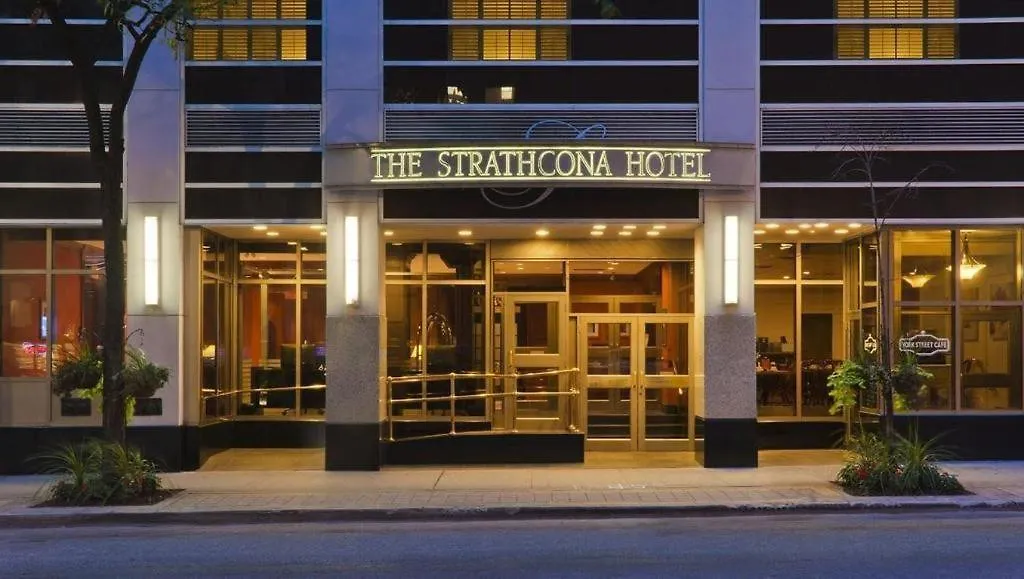
Toronto's Entertainment District sits between Front Street West and Queen Street West, flanked by Spadina Avenue to the west and University Avenue to the east - a compact zone where the CN Tower, Rogers Centre, Scotiabank Arena, TIFF Bell Lightbox, and King Street West's restaurant corridor are all within a 15-minute walk of each other. Staying centrally here means no transit dependency for most evenings out, direct PATH network access for rainy-day commuting, and an address that puts you inside the action rather than adjacent to it. This guide compares 15 central hotels across the district to help you choose the right base for your Toronto stay.
What It's Like Staying In the Entertainment District
The Entertainment District operates on two distinct rhythms: weekday mornings are dominated by Financial District commuters cutting through on foot, while evenings - especially Thursday through Saturday - bring restaurant crowds, pre-game traffic around Rogers Centre and Scotiabank Arena, and theatre-goers along King Street West. King Street West sees heavy pedestrian and rideshare congestion after 10pm on event nights, so hotels set back one block from the main strip offer meaningfully quieter sleep. The PATH underground walkway connects most hotels in the southern half of the district to Union Station and the Financial District without going outside, which is a genuine advantage in Toronto winters.
Pros:
- Direct walking access to CN Tower, Rogers Centre, Scotiabank Arena, TIFF Bell Lightbox, and King Street West dining without needing transit
- PATH network access from several hotels connects you to Union Station, the subway, and the UP Express train to Pearson Airport
- High concentration of restaurant, bar, and theatre options within a around 10-minute walk in any direction
Cons:
- Event nights at Rogers Centre or Scotiabank Arena push street noise and rideshare congestion significantly higher - upper-floor rooms matter here
- Hotel rates spike sharply during TIFF (September), major concerts, and Blue Jays playoff runs - flexible dates make a real price difference
- The district lacks the residential quiet of Yorkville or the Annex; if you want calm evenings without earplugs, this may not be the right neighborhood
Why Choose a Central Hotel In the Entertainment District
Central hotels in this district are positioned to absorb the area's density rather than fight it - meaning amenities like indoor pools, on-site dining, PATH connectivity, and fitness centres are standard rather than exceptional at most properties here. Room sizes tend to run larger in the all-suite and extended-stay formats compared to boutique options in nearby Ossington or Trinity Bellwoods, and several properties offer full kitchens or kitchenettes, which is uncommon for similarly priced hotels in downtown Toronto. Nightly rates in this district can sit around 20% higher than comparable properties in Midtown during peak season, but the trade-off is zero transit cost and time savings on every evening out.
Pros:
- Multiple properties offer direct PATH access, eliminating outdoor exposure to Toronto winters for daily commuting to the Financial District
- Several hotels include full kitchens or kitchenettes - a feature that is genuinely rare at this price point in central Toronto
- On-site dining quality is notably higher here than in comparable districts, with branded restaurant concepts at several properties
Cons:
- Parking costs are significant - most hotels charge for parking separately, and daily rates in this district typically run high
- During major events, check-in queues and lobby congestion at larger properties can be substantial
- The premium for a central address is real; travelers primarily visiting Yorkville, the Distillery District, or the Annex may find better value staying closer to those areas
Practical Booking & Area Strategy
For the quietest central positioning, hotels on or near Blue Jays Way and Simcoe Street offer the best balance - close enough to King Street West to walk to dinner in under 5 minutes, but set back enough to avoid the loudest late-night foot traffic. Union Station is the district's transit hub, connecting the subway, GO Transit regional trains, and the UP Express to Pearson Airport in around 25 minutes; hotels accessible to the station via PATH are worth prioritizing if you're arriving by train or flying into Pearson. Book at least 6 weeks ahead for stays during TIFF (early September), Blue Jays home playoffs, or major concert weekends at Scotiabank Arena, when availability drops fast and rates climb steeply. The waterfront along Queens Quay is a 10-minute walk south and worth building into any itinerary, as is a visit to Ripley's Aquarium of Canada and the CN Tower observation deck - both walkable from every hotel in this guide.
Things to do nearby include: CN Tower SkyPod, Rogers Centre stadium tours, Ripley's Aquarium of Canada, TIFF Bell Lightbox, Mirvish Productions theatres, Second City comedy club, and the King Street West restaurant corridor from Bathurst to University Avenue. Billy Bishop Toronto City Airport is around 3 km west and accessible by shuttle from several hotels, making it a faster option than Pearson for domestic arrivals.
Best Value Stays
These properties deliver well-located, central access to the Entertainment District with practical amenities at a more accessible price point - each within walking distance of the district's main draws.
-
1. The Strathcona Hotel
Show on map


 Check-infrom 15:00 until 23:59Check-outuntil 11:00
Just a few rooms left at the best rate!
fromC$ 355
-
2. Revery Toronto Downtown, Curio Collection By Hilton
Show on map


 Check-infrom 15:00 until 23:59Check-outuntil 11:00
Hurry – almost gone at this price!
fromC$ 213
-
3. Residence Inn By Marriott Toronto Downtown / Entertainment District
Show on map


 Check-infrom 16:00 until 23:59Check-outuntil 12:00
Best price guarantee
fromC$ 236
- Show on map
Best price guarantee
-
5. Toronto Marriott City Centre Hotel
Show on map


 Check-infrom 15:00 until 23:59Check-outuntil 12:00
Just a few rooms left at the best rate!
fromC$ 541
-
6. One King West Hotel And Residence
Show on map


 Check-infrom 15:00 until 23:59Check-outuntil 11:00
Rooms filling fast – secure the best rate!
fromC$ 374
-
7. Le Germain Hotel Maple Leaf Square
Show on map


 Check-infrom 15:00 until 23:59Check-outuntil 12:00
Best price guarantee
fromC$ 413
Best Premium Stays
These properties offer elevated amenities, larger room formats, or landmark-level positioning within the Entertainment District - suited to travelers prioritizing space, service depth, or dining quality on-site.
-
8. Delta Hotels By Marriott Toronto
Show on map


 Check-infrom 16:00 until 23:59Check-outuntil 12:00
Rooms filling fast – secure the best rate!
fromC$ 627
-
2. Sutton Place Hotel Toronto
Show on map


 Check-infrom 16:00 until 23:30Check-outfrom 04:00 until 12:00
Best price guarantee
fromC$ 338
-
3. Soho Hotel Toronto
Show on map


 Check-infrom 15:00 until 23:59Check-outuntil 12:00
Hurry – almost gone at this price!
fromC$ 290
-
4. Bisha, A Luxury Collection Hotel, Toronto
Show on map


 Check-infrom 16:00 until 23:59Check-outuntil 12:00
Just a few rooms left at the best rate!
fromC$ 718
-
5. Shangri-La Toronto
Show on map


 Check-infrom 16:00 until 23:59Check-outuntil 12:00
Hurry – almost gone at this price!
fromC$ 460
-
6. Nobu Hotel Toronto
Show on map


 Check-infrom 16:00 until 23:59Check-outuntil 11:00
Just a few rooms left at the best rate!
fromC$ 1478
-
14. Fairmont Royal York Hotel
Show on map


 Check-infrom 16:00 until 23:59Check-outuntil 12:00
Best price guarantee
fromC$ 308
-
8. The St. Regis Toronto
Show on map


 Check-infrom 16:00 until 23:59Check-outuntil 12:00
Rooms filling fast – secure the best rate!
fromC$ 512
Smart Travel & Timing Advice for the Entertainment District
The Entertainment District has two distinct peak periods: September during the Toronto International Film Festival (TIFF), when hotel rates across the district climb sharply and availability at upper-tier properties disappears weeks in advance; and summer weekends from June through August, when Blue Jays home games, outdoor concerts, and convention activity at the Metro Toronto Convention Centre drive consistent demand. Book at least 8 weeks ahead for any September stay - TIFF overlaps with the end of summer premium pricing, creating the most competitive booking window of the year. January and February are the district's quietest months, with lower rates and shorter check-in queues, though the PATH network becomes essential for comfortable daily movement in those temperatures.
Most travelers find that 3 nights is the practical minimum to justify a central Entertainment District base - enough time to cover CN Tower, a Rogers Centre event or King Street West dining evening, and a half-day at the waterfront or St. Lawrence Market without feeling rushed. Last-minute bookings rarely yield savings here; unlike some Toronto neighborhoods, the Entertainment District's event calendar creates predictable demand spikes that operators price accordingly. If your dates are fixed around a specific event, locking in a refundable rate early is a lower-risk strategy than waiting for price drops that may not materialize.